Types of Chains: A Guide to Every Necklace Chain Style
Cable, curb, cuban link, figaro, rope, paperclip and more: how each type of chain is built, how it wears and which one suits your style.
In this guide
- 01How a chain is built: links, width and finish
- 02Necklace chain types for everyday and pendants
- 03Bold styles: cuban link chain, figaro chain, rope chain and more
- 04Which type of chain is the strongest?
- 05Choosing a chain for a pendant
- 06Men's chain sizes: width and length
- 07Caring for your chain: kinks, tangles and storage
- 08FAQ
Knowing the main types of chains makes choosing a necklace much easier: the way the links are shaped and joined decides how a chain catches the light, how it drapes, how strong it is and whether it can carry a pendant. Two chains of the same length and color can look completely different on the neck.
This guide walks through thirteen common chain styles, from the finest cable chain to bold cuban and rope links, then compares their strength, explains which ones hold a pendant best and gives practical widths and lengths for men's and women's chains.
Short answer: The most common types of chains are cable, curb, cuban link, figaro, rope, box, snake, mariner, coffee bean, paperclip, herringbone, ball and Singapore. Cable and box chains suit pendants, curb, cuban and figaro chains are worn alone, and snake or herringbone chains give a smooth, liquid look.
How a chain is built: links, width and finish
Every chain is a series of links. Three things change its character: the shape of each link (round, oval, flat, square, elongated), how the links are joined (simply interlocked, twisted, soldered side by side or woven), and the width, usually given in millimeters.
Width matters as much as the pattern. A 2 mm cable chain is discreet and delicate, while a 6 mm curb chain is a statement on its own. Links that are flattened or faceted reflect more light, which is why curb and Singapore chains look brighter than a plain round cable chain of the same width.
The way links are joined also affects flexibility. Chains made of separate, loosely interlocked links move freely and rarely kink. Chains built from tightly fitted plates, such as snake and herringbone chains, look smooth but can bend permanently if they are knotted or folded.
Necklace chain types for everyday and pendants
These necklace chain types are mostly worn fine to medium. They are the usual choice for layering and for carrying a charm or pendant.
Cable chain
The cable chain is the classic: round or oval links of equal size, each one turned 90 degrees to the next. It is simple, flexible and easy to repair, which makes it the default chain for pendants. In French it is called a forçat chain.
Box chain
A box chain is made of square links joined so they form a continuous square tube. It is sturdy for its width, keeps its shape well and lets a pendant slide easily, which is why it is popular for medallions and lockets.
Snake chain
A snake chain is built from tightly fitted plates or rings that form a smooth, round, flexible tube with a scaly texture. It drapes beautifully and looks almost liquid on the skin. Its weak point: once kinked, it rarely returns to a perfect line. Our snake chain necklace shows how this chain reads on its own, without a pendant.
Herringbone chain
Herringbone is a flat chain of slanted links laid in rows, creating a V pattern that lies flat against the collarbone and reflects light like a ribbon of metal. It is elegant but fragile: it should be stored flat and never knotted, because a crease is very hard to remove.
Paperclip chain
The paperclip chain uses long, flat, rectangular links that look like paper clips. It is light for its size, very modern and easy to layer with finer chains. The open links also let you clip charms directly onto the chain.
Ball chain
A ball chain, or bead chain, is a row of small metal spheres joined by short connectors. It is best known for dog tags and pendants with a casual, slightly industrial feel.
Singapore chain
A Singapore chain combines twisted, faceted links that sparkle as they move. It is delicate, flexible and fairly resistant to tangling, which makes it a good everyday chain for a small pendant.

Bold styles: cuban link chain, figaro chain, rope chain and more
These chains are usually worn wider and alone. They carry the look by themselves and are the core of men's chain collections.
Curb chain
A curb chain has interlocking links that are twisted so they lie flat on the skin. The links are often faceted to add shine. It is sturdy, comfortable and one of the most versatile chains for both men and women. In French it is the gourmette, the same name used for curb bracelets.
Cuban link chain
The cuban link chain is a heavier, tighter version of the curb chain, with thick rounded links that sit close together. It is strongly associated with Miami and hip-hop culture and is usually worn from 5 mm wide upwards. Our men's cuban link chain is a typical example of this dense, flat-lying look.
Figaro chain
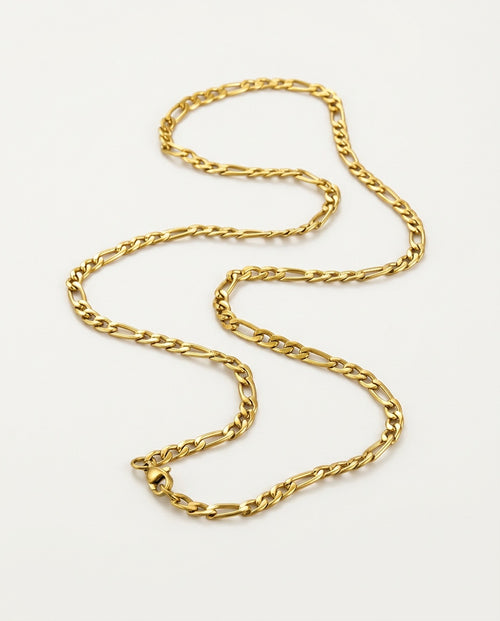
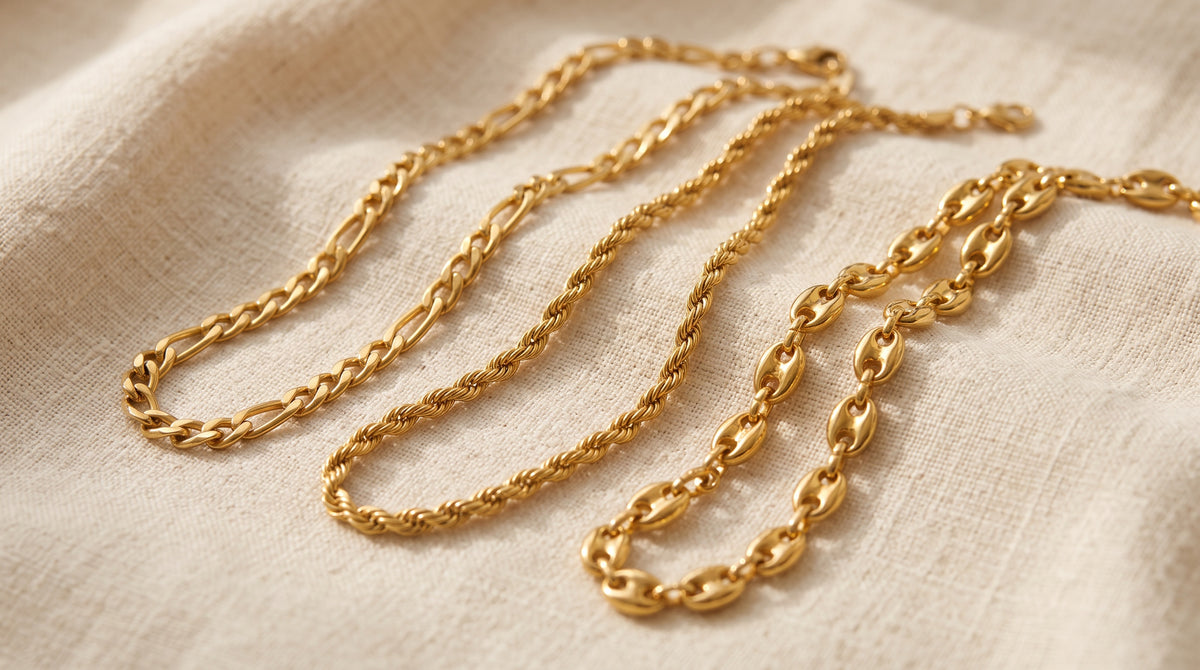
The figaro chain is a flattened curb chain with a rhythm: typically three short links followed by one elongated link. It originated in Italy and takes its name from the opera character Figaro. The pattern gives a distinctive look even without a pendant, as on our gold figaro chain.
Rope chain
A rope chain is made of small links woven in a spiral so the chain looks like a twisted rope. The twist catches light from every angle and gives a lot of presence even in a medium width. Our gold rope chain shows the effect well.
Mariner chain
Also called anchor chain, the mariner chain has oval links with a small bar across the middle, inspired by ship anchor chains. It lies flat and is popular for men's necklaces and bracelets. See our silver mariner chain.
Coffee bean chain
The coffee bean chain uses oval, slightly domed links with a line across the center, so each link looks like a coffee bean. It is rounded, smooth to the touch and sits between a classic cable and a bolder curb. Our coffee bean chain is a good example.
Which type of chain is the strongest?
Strength depends on the metal and the thickness, but the construction makes a real difference. Here is how the main types of chains compare.
| Chain | Look | Strength | Kink or tangle risk | Best for |
|---|---|---|---|---|
| Cable | Classic, discreet | Good | Tangles when fine | Pendants, layering |
| Box | Square, structured | Very good | Low | Medallions, lockets |
| Curb / cuban | Flat, bold | Very good | Low | Worn alone, men's chains |
| Figaro | Patterned, flat | Good | Low | Worn alone |
| Rope | Twisted, shiny | Very good | Low | Worn alone or with a pendant |
| Mariner | Oval with bar | Very good | Low | Men's chains and bracelets |
| Paperclip | Elongated, modern | Good | Low | Layering, charms |
| Snake | Smooth, liquid | Fair | Kinks if folded | Worn alone, light pendants |
| Herringbone | Flat, glossy | Fragile | Kinks easily | Worn alone |
As a rule, chains with solid, interlocked links (box, curb, cuban, rope, mariner) resist daily wear best. Plate chains (snake, herringbone) and very fine cable chains need more care.
Choosing a chain for a pendant
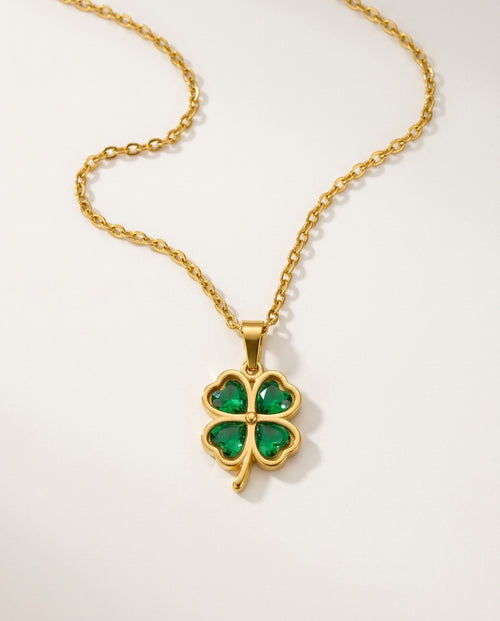
A pendant needs a chain that can carry its weight and let it hang straight. Box, cable, rope and Singapore chains are the safest options. Check that the bail, the loop of the pendant, is large enough to pass over the clasp and the links.
- Light charm: a fine cable or Singapore chain keeps the focus on the pendant.
- Medallion or locket: a box or rope chain, 2 to 3 mm wide, carries more weight without twisting.
- Bold pendant for men: a curb or rope chain of 3 to 5 mm balances a larger piece.
Avoid hanging heavy pendants on herringbone chains: the weight can crease the flat links. The length also changes where the pendant falls, so check our necklace length chart before choosing.
Men's chain sizes: width and length
For men, width sets the style. Around 2 to 3 mm, a chain is discreet and works under a shirt or with a pendant. From 4 to 6 mm, it becomes visible and can be worn alone. Above 7 mm, it is a clear statement piece, usually a cuban or curb chain.
Length depends on build and on where you want the chain to sit:
- 18 in (45 cm): close to the base of the neck, fairly short on most men.
- 20 in (50 cm): on the collarbone, the most common length for a chain worn alone.
- 22 in (55 cm): just below the collarbone, comfortable over a T-shirt.
- 24 in (60 cm): mid-chest, the usual choice for a pendant.
A wider neck or broad shoulders make a chain sit higher, so add one size if you are between two. Our men's chains bring together the figaro, cuban, rope, mariner and coffee bean styles described above.

Caring for your chain: kinks, tangles and storage
Most chain damage comes from storage, not wear. Store each chain separately, fastened, in a pouch or a lined compartment, and lay snake and herringbone chains flat. Remove chains before sleeping, swimming or sport to avoid pulling on the links and clasp.
Fine chains are the most likely to knot. If it happens, do not pull on both ends: follow our guide on how to untangle a necklace to loosen the knot without breaking a link. And if you wear several chains together, mix different types and lengths, as explained in our guide to layering necklaces: contrasting textures tangle less than identical chains.
FAQ
What is the most popular type of chain?
The cable chain is the most widespread, because it suits almost every pendant and every budget. For chains worn alone, curb, cuban link and figaro chains are among the most popular, especially in men's jewelry.
What is the difference between a curb chain and a cuban link chain?
A cuban link chain is a type of curb chain. Its links are thicker, more rounded and set more tightly together, which gives a denser, heavier look than a standard curb chain of the same width.
Which chain is least likely to tangle?
Chains with stiffer, solid links tangle least: box, rope, curb, cuban and mariner chains. Very fine cable chains tangle most easily, especially when several are worn or stored together.
Can a figaro chain hold a pendant?
Yes, as long as the bail is large enough for the links. The figaro pattern is designed to be seen, though, so many people wear it alone or with a small, discreet pendant.