How to Clean Jewelry at Home: A Safe Method for Every Material
Silver, gold, plated, steel, pearls, stones or costume pieces: the right home cleaning method for each material, and the mistakes that cause damage.
In this guide
- 01Before you start: tools and safety rules
- 02How to clean jewelry at home: a method for each material
- 03How to clean tarnished jewelry
- 04How to clean gold plated jewelry and gold-colored pieces
- 05How to clean costume jewelry
- 06How to clean pearls and delicate gemstones
- 07Stainless steel, leather and mixed pieces
- 08FAQ
Learning how to clean jewelry at home is mostly about matching the method to the material. Warm water and a drop of dish soap suit most pieces, but the same bowl can dull a plated chain, loosen a glued stone or weaken the silk thread of a pearl strand.
This guide gives you one reference table, then a short method for each family: tarnished silver, gold plated and gold-colored pieces, costume jewelry, pearls and gemstones, steel and leather. For the details on precious metals, it points you to our dedicated guides.
Short answer: For most jewelry, soak or dip briefly in warm water with a drop of mild dish soap, brush gently with a soft toothbrush, rinse and dry completely with a lint-free cloth. Never soak pearls, porous stones or glued pieces, and never use bleach or abrasive powders on plated jewelry.
Before you start: tools and safety rules
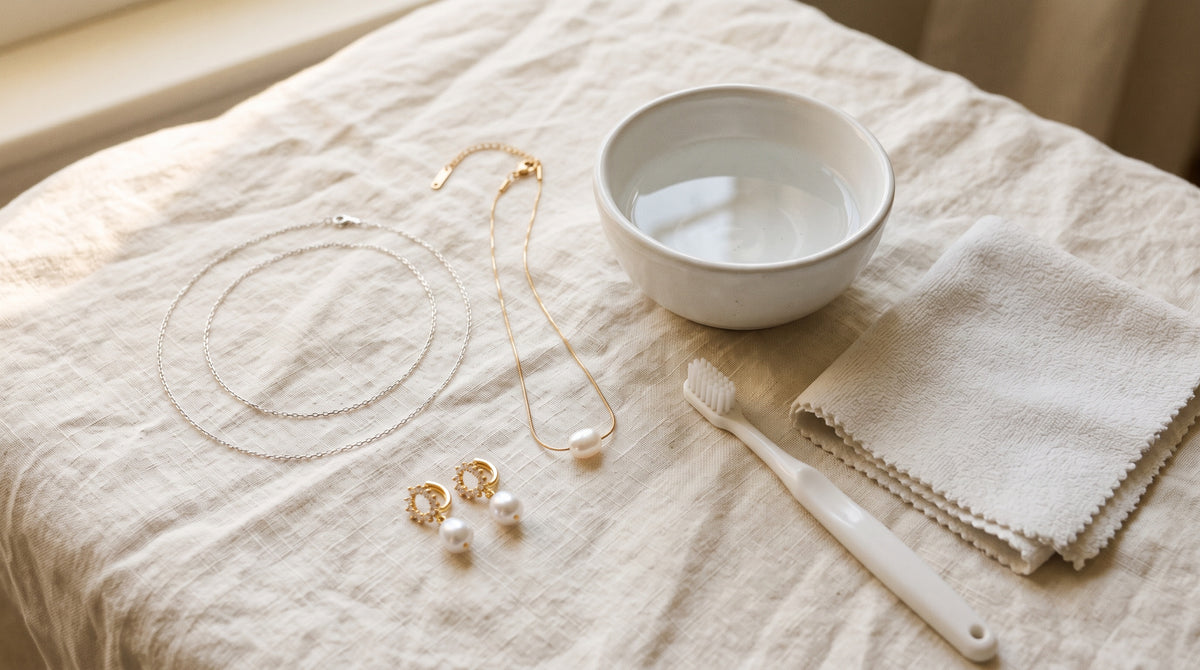
You need very little: a small bowl, lukewarm water, a fragrance-free mild dish soap, a soft baby toothbrush, cotton swabs and two microfiber cloths (one damp, one dry). A sink stopper or a strainer prevents small pieces from disappearing down the drain.
- No bleach or chlorine. Chlorine attacks silver and the alloys in gold, and can weaken solder joints.
- Never mix cleaning products. Bleach combined with ammonia or vinegar releases toxic gases.
- Skip toothpaste and scouring powders. They are abrasive and leave fine scratches, especially on plating.
- Be careful with ultrasonic cleaners. They are unsuitable for pearls, porous or fractured stones, glued settings and plated pieces.
- Dry everything fully. Moisture trapped in clasps and links is what causes new tarnish.
Some jobs are better left to a jeweler: a loose stone, a worn prong, a bent clasp or a valuable antique. Cleaning a piece with a weak setting can dislodge the stone, so check for movement by gently tapping the piece near your ear before you start; a rattle means it should go to a professional first.
How to clean jewelry at home: a method for each material
Identify the material first, from the product page or the stamp, then follow the matching line. When a piece mixes materials, such as a chain with pearls, follow the most delicate one.
| Material | Safe method | Avoid |
|---|---|---|
| Sterling silver | Polishing cloth; soapy water; baking soda paste for tarnish | Bleach, pool water, silver dip on stones |
| Karat gold | Warm soapy water, soft brush, dry cloth | Bleach, abrasive powders |
| Gold plated and gold-colored | Damp microfiber, a drop of soap, dry at once | Soaking, abrasives, silver dips, ultrasonic |
| Stainless steel | Soapy water, soft brush; baking soda paste for marks | Bleach, steel wool |
| Pearls | Soft damp cloth after each wear | Soaking, ultrasonic, steam, any chemical |
| Porous stones (opal, turquoise, lapis, malachite) | Wipe with a damp cloth | Soaking, ultrasonic, heat |
| Hard stones (sapphire, ruby, quartz) | Soapy water, soft brush around the setting | Ultrasonic if the stone is treated or fractured |
| Costume and glued pieces | Barely damp cotton swab, cool air to dry | Soaking, hot water |
| Leather and cord | Dry cloth; let air-dry if wet | Water baths, heat, oils |
For a full routine on precious metals, see our guides on cleaning silver jewelry and cleaning gold jewelry without scratching it.
How to clean tarnished jewelry
Tarnish is a surface reaction, not dirt. On silver it is silver sulfide, formed when the metal meets sulfur in the air, in rubber, wool or some foods. On brass and copper it is oxidation. How you remove it depends on what lies beneath.
Tarnished silver
Light yellowing comes off with a silver polishing cloth. For darker tarnish, mix baking soda with a little water into a paste, apply with your fingers or a soft cloth, rub gently along the links, rinse and dry. A thin piece like a silver chain necklace only needs a few strokes; work along the chain, not across it.

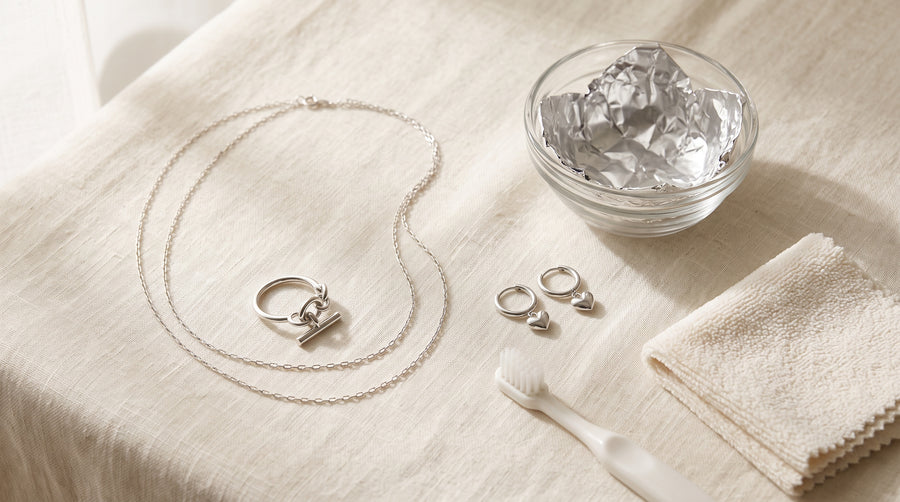
For heavily tarnished silver without stones, the foil method works well: line a bowl with aluminum foil, add one tablespoon of baking soda per cup of very hot water, lay the piece on the foil for a few minutes, then rinse and dry. It removes tarnish chemically, including the deliberate dark finish in engraved details, so skip it on oxidized designs.
Tarnished brass, copper and costume metals
Wipe with a soft cloth dampened in soapy water, then dry immediately. Avoid vinegar or lemon on anything plated or set with stones: acids can strip the coating and dull the stones.
When tarnish will not come off
On plated jewelry, dark or coppery patches often mean the top layer has worn through. No cleaning can bring it back; only replating by a jeweler can. Polishing harder will remove more of the remaining layer.
How to clean gold plated jewelry and gold-colored pieces
Gold plating is a thin layer, so the goal is to clean without rubbing it away. This also applies to gold-colored fashion jewelry in general.
- Dampen a microfiber cloth with lukewarm water and a drop of mild dish soap.
- Wipe the piece gently, following the shape; use a cotton swab for links and clasps.
- Wipe again with a cloth dampened in clean water, without soaking the piece.
- Pat completely dry, then leave it in the open air for a few minutes before storing.
Do not use silver polishing cloths impregnated with chemicals, baking soda, toothpaste or jewelry dips on plated pieces. If you are unsure what your piece is made of, our guide on telling if gold is real explains the stamps to look for.
How to clean costume jewelry
Costume jewelry often combines base metals, plating, glass, acrylic and stones held with glue. Water is the main risk: it seeps behind glued stones, dissolves adhesive and leaves the foil backing of rhinestones cloudy.
- Dust with a soft, dry makeup brush first.
- Clean the metal with a barely damp cotton swab and a trace of soap, avoiding the stone edges.
- Wipe stones with a dry microfiber cloth; a swab lightly dampened with water can lift fingerprints.
- Dry with a hair dryer on the cool setting, held at a distance, and lay the piece face down so no water collects in the settings.
Earrings deserve extra attention, because the posts and hooks touch skin directly. Our guide on cleaning earrings and their backs covers that hygiene step.
How to clean pearls and delicate gemstones
Organic and porous materials absorb liquids and scratch easily, so they need the lightest touch of all.
How to clean pearls
Pearls are soft and their nacre reacts to acids, perfume and sweat. After each wear, wipe them with a soft cloth, slightly damp with plain water. Once in a while, add a trace of mild soap to the cloth, then wipe with plain water. Lay a strand flat on a towel to dry for several hours; hanging a wet strand stretches the thread. Never soak a strand, which weakens the silk and can stain the drill holes.

A freshwater pearl necklace worn often benefits from this quick wipe more than from any occasional deep clean.
Porous and soft stones
Opal, turquoise, lapis lazuli, malachite, amber and coral can absorb water, soap and oils. Wipe them only, and keep them away from heat. A ring set with an opal, like the gold opal ring, should be cleaned around the stone with a swab rather than dipped.
Hard stones
Sapphire, ruby, quartz and amethyst tolerate soapy water and a soft brush behind the setting, where soap and skin oils build up and dull the sparkle. Rinse well and dry. Emeralds and many treated stones should still avoid ultrasonic cleaners.
Stainless steel, leather and mixed pieces
Stainless steel is the easiest material to maintain. Soapy water and a soft brush remove most residue; a baking soda paste lifts water marks. A piece such as the men's stainless steel bracelet only needs a thorough dry, especially inside the clasp.
Leather and fabric cords should stay dry: wipe them with a dry cloth, and if they get wet, let them air-dry flat away from radiators. For pieces that mix leather and metal, clean the metal parts with a barely damp swab.
- Clean everyday pieces lightly once a week and more deeply once a month.
- Wipe after sport, sunscreen or perfume.
- Store each piece in its own pouch to limit air exposure and scratches.
FAQ
Can I clean jewelry with vinegar?
Diluted vinegar can help with some mineral residue on stainless steel or karat gold without stones. Avoid it on pearls, porous stones, plated pieces and costume jewelry, because acid damages nacre, stones and thin coatings.
Is toothpaste safe for cleaning jewelry?
It is not recommended. Toothpaste is abrasive and leaves micro-scratches, especially on silver, gold plating and soft stones. A mild dish soap and a soft brush clean just as well without the risk.
Are ultrasonic jewelry cleaners safe?
They are effective on solid metal pieces and hard stones without inclusions. They should not be used on pearls, opals, emeralds, porous or glued stones, or plated jewelry, which can crack, loosen or lose their finish.
How often should I clean my jewelry?
A wipe after each wear is the best habit. Pieces worn daily benefit from a gentle wash every few weeks, while occasional pieces need cleaning only when they look dull.