How to Clean Silver Jewelry at Home: 3 Gentle Methods
Bring back the shine on silver chains, rings and earrings with mild soap, baking soda and foil, or a soft cloth, and learn what never to use.
In this guide
Knowing how to clean silver jewelry at home saves you from ever putting away a dull chain or a darkened ring for good. Silver naturally darkens over time, and in most cases a few household basics bring the shine back: warm water, mild soap, baking soda, aluminum foil and a soft cloth.
This guide explains why silver darkens, which method suits which piece, how to treat chains, rings and earrings, and what to avoid so you never scratch the metal while cleaning it. Start with the gentlest method and only move to the next one if you need to: most pieces never need more than step one.
Short answer: For light dullness, soak silver for five minutes in warm water with a drop of mild dish soap, brush gently with a soft toothbrush, rinse and dry. For dark tarnish on solid silver, lay it on aluminum foil in hot water with a tablespoon of baking soda per cup, then rinse and polish with a soft cloth.
Why silver jewelry turns dark
The gray or black film on silver is called tarnish. It forms when silver reacts with sulfur compounds in the air, in sweat, in cosmetics and even in some foods. Sterling silver, stamped 925, is 92.5% silver alloyed with another metal, usually copper, which makes it stronger but also more reactive. Humidity speeds the process up, which is why a ring left in a bathroom darkens faster than one kept in a drawer.
Several everyday things accelerate it:
- perfume, hairspray, body lotion and sunscreen;
- chlorinated pool water and hot tubs;
- rubber bands, wool and some cardboard boxes, which release sulfur;
- long periods of storage in open air.
Tarnish is a surface reaction. It does not mean the silver is poor quality, and it can almost always be removed. Silver worn often actually darkens more slowly, because daily contact with skin and fabric gently polishes it.
Before you start: identify your piece
Not all silver-colored jewelry is the same, and the right method depends on what you are holding. Look for a stamp inside a ring or on the clasp tag of a chain; the guide to what the 925 stamp means on jewelry explains how to read it.
- Solid sterling silver (stamped 925): silver all the way through. It tolerates every method in this guide.
- Silver-plated jewelry: a thin layer of silver over another metal. Clean it gently, with soap and a soft cloth only, never with anything abrasive, because the layer can wear through.
- Pieces with pearls or soft stones (pearls, opal, turquoise, moonstone, labradorite, amber): avoid soaking. Clean the metal around them with a barely damp cloth.
- Oxidized designs: some pieces are blackened on purpose in the recesses to bring out a pattern. Strong cleaning removes that effect, so stick to a soft cloth on the raised surfaces.
Stainless steel, costume pieces and leather follow other rules. For those, see the guide on how to clean jewelry at home, material by material.
How to clean silver jewelry: three gentle methods
These three methods cover almost every situation, from a ring that has simply lost its sparkle to a chain that has turned almost black after months in a drawer. Choose according to how dark the piece is and what it is made of.
Method 1: mild soap and warm water
This is the everyday method, safe for almost everything. It removes the film of skin oils, lotion and dust that makes silver look dull long before it actually tarnishes.
- Fill a bowl with warm water and add a few drops of mild dish soap, free of lemon or degreasing additives.
- Let the piece soak for five to ten minutes (skip the soak for pearls and soft stones).
- Brush gently with a soft baby toothbrush, paying attention to clasps, links and the back of settings.
- Rinse under clean lukewarm water. Close the sink drain first.
- Pat dry with a soft towel, then let it air dry completely before putting it away.
Moisture trapped in a clasp or a chain is what leads to fresh tarnish, so drying is not a step to rush.
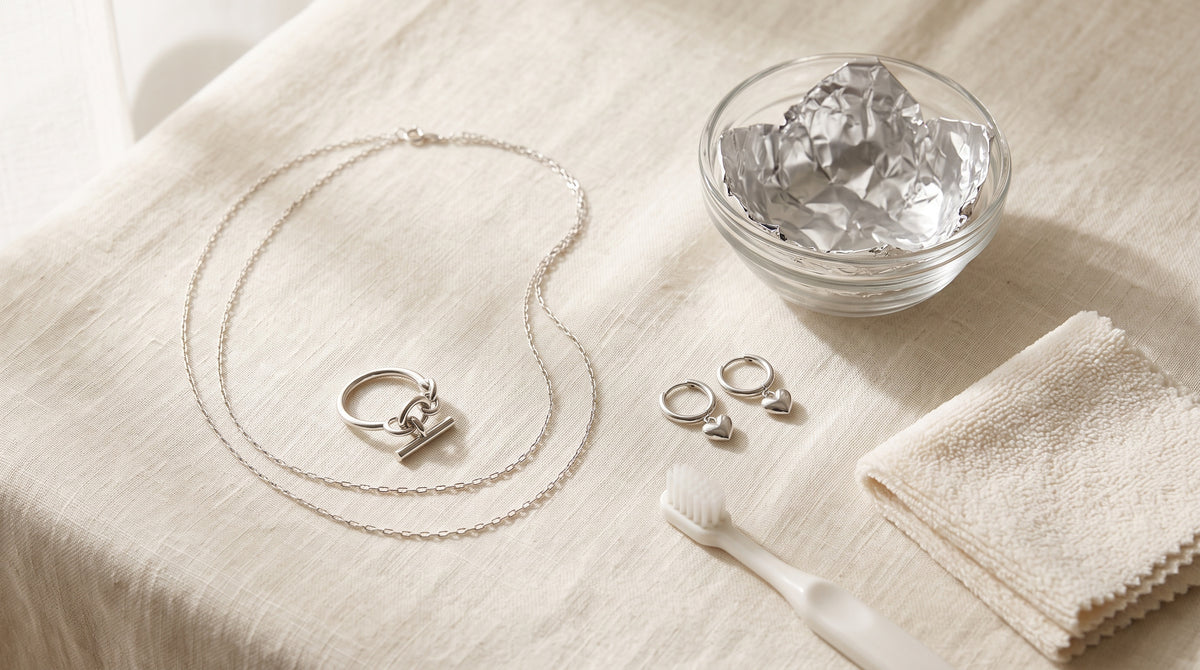
Method 2: baking soda and aluminum foil
For silver that has turned properly dark, this is the most effective home method, and it requires no rubbing. It works through a simple chemical reaction: in contact with aluminum in a hot baking soda solution, the silver sulfide on the surface turns back into silver, and the sulfur moves to the foil.
- Line a heat-safe bowl or a small dish with aluminum foil, shiny side up.
- Place the silver pieces on the foil, making sure each one touches it.
- Pour in hot water, enough to cover the jewelry, then add about one tablespoon of baking soda per cup of water (250 ml). It will fizz slightly.
- Wait two to ten minutes. You may notice a faint sulfur smell and see the foil darken: that is the tarnish leaving the silver.
- Remove the pieces with a wooden or plastic utensil, rinse them in clean water and dry them thoroughly with a soft cloth.

Use this method for solid sterling silver only. Avoid it for silver-plated pieces, oxidized designs, pearls, porous stones and anything with glued elements, as hot water can loosen adhesive. Very dark pieces may need a second bath with fresh foil.
Method 3: the polishing cloth
A soft microfiber cloth, or a cloth made specifically for polishing silver, is the best tool for regular care and for a final shine after methods 1 and 2. Rub gently in straight back-and-forth movements rather than circles, which can leave fine swirl marks, and use a clean part of the cloth as it darkens.
Polishing cloths impregnated with a cleaning agent work well on solid silver. On silver-plated jewelry, choose a plain microfiber cloth instead so you do not wear down the layer.
How to clean a silver chain, ring or earrings
The method stays the same, but each type of piece has its own weak spot.
How to clean a silver chain or necklace
Chains collect residue between their links, and a fine chain kinks if it is rubbed in a ball. Soak it in soapy water, then run the soft toothbrush along the length in one direction, holding the chain flat on your palm. To dry, lay it out on a towel and press, rather than rolling it up. If it is tangled, work the knot loose with two pins on a flat surface before you clean it.
A fine silver chain necklace responds well to a short soap bath; a heavier link like the silver mariner chain hides more grime in its flat links and benefits from a little more brushing. The foil method works on both if they are solid silver.

How to clean a silver ring
Rings get the most contact with soap, hand cream and daily wear. Brush the inside of the band and the underside of any setting, where residue builds up and dulls stones. Openwork designs such as a silver chain ring trap soap in every link: soak them a little longer and rinse well.
For a ring set with a softer stone, like a labradorite ring, clean the stone with a damp cloth only, clean the band around it with a cotton swab, and dry it right away.
Earrings
Clean posts and hooks regularly with a cotton pad dipped in soapy water, then dry them: it keeps them comfortable to wear as well as bright. Hold delicate pieces such as silver heart earrings by the front, not by the post, so you do not bend it.
What to avoid when cleaning silver
Some popular tips do more harm than good.
- Toothpaste: it is abrasive and leaves fine scratches, especially on polished surfaces, and can remove plating entirely.
- Vinegar and lemon juice: acidic, harmful to pearls and many stones, and no more effective on silver than a soap bath.
- Bleach and chlorine: they damage silver and can pit the surface. Take jewelry off before swimming or cleaning the house.
- Mixing products: never combine cleaning products to make them “stronger”. One gentle method at a time is enough.
- Paper towels and rough fabrics: their fibers can scratch. Use soft cotton or microfiber.
- Silver dips on stones: liquid silver dips work fast but can etch pearls and soft stones and strip oxidized details. If you use one, keep it for plain solid silver and rinse immediately.
How to keep silver bright longer
Prevention takes less time than cleaning.
- Last on, first off. Put jewelry on after perfume, hairspray and lotion have dried, and take it off before showering, swimming, sport or sleeping.
- Wipe after wearing. A quick pass with a soft cloth removes skin oils before they settle.
- Store it airtight. A small zip bag or a closed pouch, with the air pressed out, slows tarnish considerably. Keep pieces separate so they do not scratch each other.
- Keep it dry. A drawer or a jewelry box is better than a bathroom shelf. A small silica gel sachet helps absorb humidity.
- Wear it. Silver that is worn regularly stays brighter than silver left untouched for months.
Boxes, pouches and anti-tarnish strips are compared in the guide on how to store jewelry. If you also wear gold or gold-plated pieces, their care differs on a few points: see the guide on how to clean gold jewelry.
FAQ
What is the best way to clean silver jewelry at home?
For light dullness, warm water with a few drops of mild soap and a soft brush. For dark tarnish on solid silver, the baking soda and aluminum foil method, followed by a rinse and a gentle polish with a soft cloth.
Can I clean silver-plated jewelry the same way?
Only gently. Use mild soap, lukewarm water and a plain soft cloth, with no long soaking and nothing abrasive. The silver layer is thin and can wear away with aggressive cleaning, revealing the base metal underneath.
How often should I clean my silver jewelry?
Wipe it after wearing, give it a soap bath every few weeks, and keep the baking soda method for when it has visibly darkened. Pieces stored airtight need cleaning far less often.
Why does my silver ring leave a mark on my finger?
The dark mark comes from tarnish or from the copper in the alloy reacting with sweat or skin products. Cleaning the ring and keeping the skin dry under it usually stops it.