Hypoallergenic Jewelry: The Metals Sensitive Skin Tolerates Best
What hypoallergenic jewelry really means, which metals cause reactions, EU nickel limits, why skin turns green and earrings for sensitive ears.
In this guide
Hypoallergenic jewelry is what most people start looking for after a pair of earrings leaves their lobes red and itchy, or a ring leaves a rash or a green band on the finger. The word sounds reassuring, but it is not a guarantee, and the metal that matters is often hidden under a plating.
This guide explains what causes jewelry allergies, which metals sensitive skin usually tolerates best, how the European nickel rules work, why some jewelry turns skin green or black, and how to choose earrings that stay comfortable.
Short answer: Hypoallergenic jewelry is made from metals unlikely to trigger a reaction, mainly because they release little or no nickel. The best tolerated are implant-grade titanium, niobium, platinum and gold of 14 karats or more, followed by surgical stainless steel and sterling silver. The word is a marketing term, not a guarantee.
What causes a jewelry allergy?
In most cases the culprit is nickel. Nickel allergy is the most common contact allergy in Europe, and jewelry, especially earrings, is one of the main ways people first become sensitized. Sweat slowly dissolves tiny amounts of nickel from the metal, and the immune system reacts to it as if it were an intruder. Doctors call this allergic contact dermatitis.
The reaction is usually delayed, appearing roughly 12 to 48 hours after contact, which is why many people never connect the rash with the earrings they wore the day before. Typical signs include:
- itching, redness or a rash exactly where the metal touches the skin;
- dry, scaly patches or small blisters;
- oozing or crusting around pierced lobes in stronger reactions.
Once you are sensitized, the allergy generally stays for life, so limiting contact is the main strategy. Cobalt and, less often, chromium can cause similar reactions. If a rash spreads, lasts, or a piercing looks infected, see a doctor or dermatologist: a patch test is the only reliable way to know exactly what your skin reacts to.
What metals are hypoallergenic?
No metal is hypoallergenic for absolutely everyone, but some release so little nickel, or none at all, that they rarely cause trouble. The table compares the metals you will meet most often in jewelry.
| Metal | Nickel | How sensitive skin usually reacts |
|---|---|---|
| Implant-grade titanium | No added nickel | Very well tolerated; widely used for new piercings |
| Niobium | No added nickel | Very well tolerated |
| Platinum | Usually alloyed with other platinum-group metals | Very well tolerated |
| Yellow gold, 14 karats or more | Rarely contains nickel | Usually well tolerated |
| White gold | Can contain nickel, depending on the alloy | Ask before buying |
| Sterling silver | Usually none (alloyed with copper) | Usually fine for nickel allergy; tarnishes |
| Surgical stainless steel (316L) | Contains nickel, tightly bound | Most people with nickel allergy tolerate it; very sensitive skin may not |
| Plated fashion jewelry | Depends on the metal under the plating | Fine until the plating wears through |
| Nickel silver | Yes (copper, zinc and nickel, no silver) | Best avoided with a nickel allergy |
Titanium and niobium
Implant-grade titanium, the same family of alloys used for medical implants, is what many professional piercers choose for fresh piercings. Niobium behaves similarly and can be anodized in colors without paint or plating. Both are light, which makes them comfortable, but the choice of styles is narrower than in gold or silver.
Platinum and higher-karat gold
The higher the karat, the more pure gold and the less alloy metal: 14-karat gold is 58.5% gold, 18-karat gold is 75%. Yellow gold alloys rarely contain nickel. White gold is the exception: some alloys use nickel to whiten the gold, and a rhodium plating can hide it until it wears off. Platinum jewelry is typically 90 to 95% platinum and very rarely causes reactions.
Stainless steel and sterling silver
Surgical stainless steel such as 316L does contain nickel, but it is locked inside the alloy behind a protective chromium oxide layer, so very little is released. Most people with a nickel allergy wear it without trouble; the most sensitive may still react. The guide on whether stainless steel tarnishes covers how it ages and how to clean it. Sterling silver is 92.5% silver, usually alloyed with copper rather than nickel; it suits most nickel-allergic skin but darkens over time.
Plated and fashion jewelry
Most affordable jewelry is a base metal, often brass or another copper alloy, covered with a thin layer of gold, silver or rhodium. While the plating is intact, your skin mostly touches the plating. Friction, sweat and perfume gradually wear it down, especially on rings and earring posts, and the base metal then comes into contact with the skin. This is why a piece can feel fine for months and then start to bother you.
Nickel free jewelry and the EU nickel rules
In the European Union, nickel in jewelry is regulated by REACH (Annex XVII, entry 27), which replaced the 1994 Nickel Directive. The limits concern how much nickel an item releases onto the skin, not how much it contains:
- parts inserted into a pierced ear or body piercing, such as earring posts: no more than 0.2 µg/cm² per week;
- items in direct and prolonged contact with the skin, such as rings, necklaces and bracelets: no more than 0.5 µg/cm² per week, and a coating must keep the item under that limit for at least two years of normal use.
A “nickel free” label can therefore mean two things: no nickel in the alloy at all, or nickel release below the legal limit. Both help, but neither guarantees zero reaction for very sensitive skin. The US has no comparable federal limit for adult jewelry. To check a piece yourself, a dimethylglyoxime (DMG) spot test turns a cotton swab pink when nickel is released.
Earrings for sensitive ears: what to look for
Ears react more than anywhere else because the post sits inside a channel of skin, in constant contact with moisture. A few choices make a real difference:
- Check the post, not just the front. The post and back are what touch the inside of the piercing; their material matters more than the decorative part.
- Let new piercings heal in implant-grade metal. Ask your piercer what the starter jewelry is made of, and wait until the piercing has healed before switching.
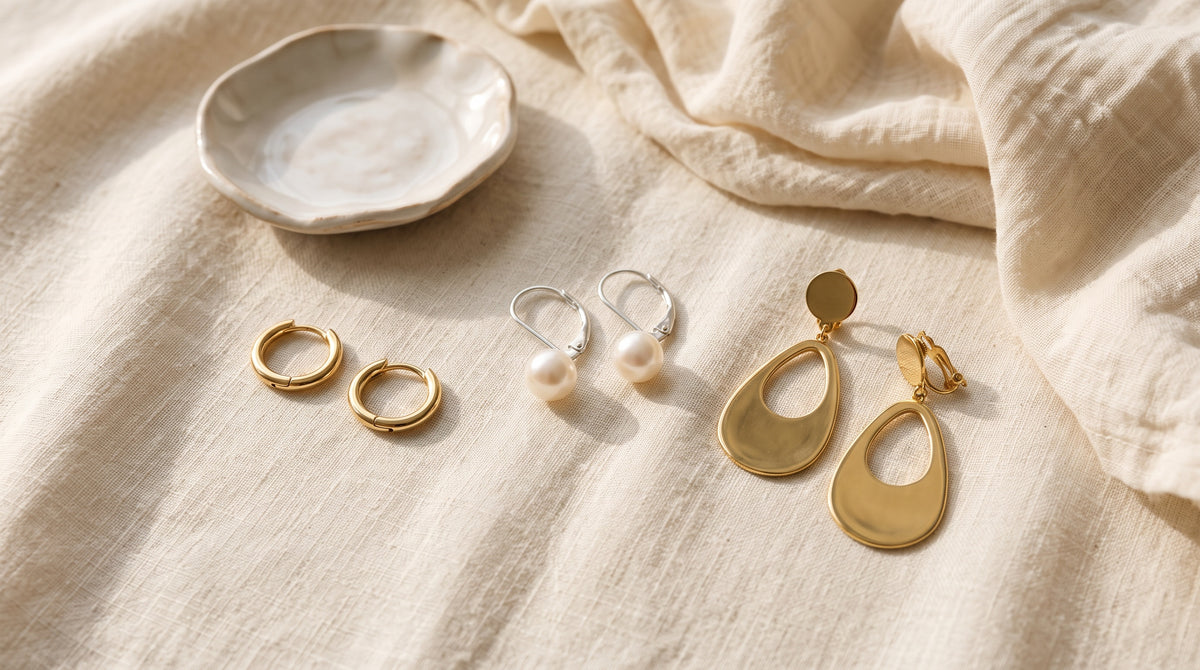
- Go light and small. Light styles put less strain on an irritated lobe; our huggie earrings sit close to the ear with a short hinged hoop.
- Prefer closed fastenings. Leverbacks close on themselves without a tight butterfly back pressing on the lobe, as on our pearl leverback earrings.
- Skip the piercing altogether. Clip-ons rest on the outside of the lobe. Our teardrop clip-on earrings and clip-on hoops give the look of pierced styles without a post.
- Keep posts clean. Skin oils and residue build up on posts and backs; the steps in this guide on how to clean earrings take a few minutes.
The way an earring attaches matters as much as its shape. The overview of types of earrings and earring backs helps you spot comfortable styles, and the full earrings collection lets you compare them.

Why does jewelry turn skin green?
A green mark is not an allergy. It comes from copper, present in brass, bronze, sterling silver and lower-karat gold. Sweat, skin acids, lotions and chlorinated water react with the copper and form copper salts, which leave a green or blue-green tint on the skin.
The stain is harmless and washes off with soap and water. To limit it, keep hands and the piece dry, take rings off before washing up or swimming, and put on jewelry after lotion has absorbed. A jewelry-specific clear coating on the inner surface can act as a temporary barrier, but it wears away and must be reapplied.
When jewelry leaves a black mark
Gray or black marks have other causes. Makeup powders and sunscreens can contain particles harder than metal that rub off a fine dark dust; tarnished silver can transfer its dark sulfide layer; and some people's sweat is more acidic, which speeds up both effects. Like green marks, they are harmless. Cleaning the skin and the piece usually solves the problem.

How to wear jewelry with a nickel allergy
A nickel allergy does not mean giving up jewelry. It means choosing carefully and limiting contact:
- Ask what the piece is made of, including the base metal under any plating and the earring posts.
- Watch hidden contact points such as clasps, earring backs and the inside of rings, which rub the most.
- Limit sweat and friction: take jewelry off for sport, sleep and showers.
- Save sensitive pieces for short wear, a few hours for an evening rather than all day.
- Remove anything that itches straight away, wash the area with mild soap and let it settle. If it does not improve within a few days, ask a pharmacist or doctor.
Keep a simple note of the pieces that cause trouble and those that do not. Over time, it shows you which metals and fastenings your skin accepts.
FAQ
Is sterling silver hypoallergenic?
Sterling silver is usually alloyed with copper, not nickel, so most people with a nickel allergy wear it comfortably. Some lower-quality silver alloys or platings may contain nickel, so it is worth asking. Silver also tarnishes, which is a cosmetic issue rather than an allergy.
Can you suddenly become allergic to jewelry?
Yes. Sensitization can develop after years of wearing a metal without problems, often after repeated or prolonged contact, such as a new piercing or a ring worn day and night. Once it appears, it usually stays.
Is gold-plated jewelry OK for sensitive skin?
It depends on the metal under the plating and on how long the plating lasts. Many people wear plated jewelry comfortably, especially for occasional wear. If you react once the plating wears thin, the base metal is the cause.
Are clip-on earrings good for sensitive ears?
They avoid any contact with the inside of a piercing, which is where most earring reactions start. The metal still touches the skin surface, so a severe nickel allergy may still react, but far less often than with posts.