Types of Earrings: Every Style and Earring Back Explained
Studs, hoops, huggies, drops, climbers, cuffs and clip-ons: every earring style explained, plus the types of earring backs and how to choose them.
In this guide
The types of earrings you can choose from go far beyond studs and hoops: huggies, threaders, climbers, cuffs and clip-ons all sit differently on the ear, and each is held by its own kind of fastening. Knowing the names makes shopping easier; knowing how each one attaches makes wearing them more comfortable.
This guide walks through every common earring style, how it looks on the ear and when it works best, then explains the different earring backs, from butterfly backs to leverbacks, so you can match the fastening to your ears and your day.
Short answer: The main types of earrings are studs, hoops, huggies, drops, dangles, chandeliers, threaders, ear climbers, ear cuffs and clip-ons. They differ in where they sit and how they attach: a post with a back, a hinged hoop, a hook, a lever, a chain threaded through the piercing, a clip, or gentle pressure on the cartilage.
Earring styles at a glance
The table sums up each style before the details below. “Post” means the straight pin that goes through the piercing; standard lobe posts are usually 0.8 to 1 mm thick.
| Type | How it attaches | Where it sits | Best for |
|---|---|---|---|
| Stud | Post and back | Flat on the lobe | Every day, minimal looks |
| Hoop | Hinge, latch or post | Circles below the lobe | Every day to evening, depending on size |
| Huggie | Hinged small hoop | Hugs the lobe | Stacking, second and third holes |
| Drop | Post or hook | Hangs just below the lobe | Polished everyday wear |
| Dangle / chandelier | Hook or post | Hangs low and moves | Evenings, special occasions |
| Threader | Fine chain pulled through the hole | Hangs front and back | Light, fluid minimalism |
| Ear climber | Post, with a bar curving upward | From the lobe up the edge | A full-ear look with one piece |
| Ear cuff | Pressure on the cartilage | Middle or upper ear | No extra piercing needed |
| Clip-on | Hinged clip or screw | On the lobe | Unpierced or sensitive ears |
Everyday earring styles: studs, hoops and huggies
Studs
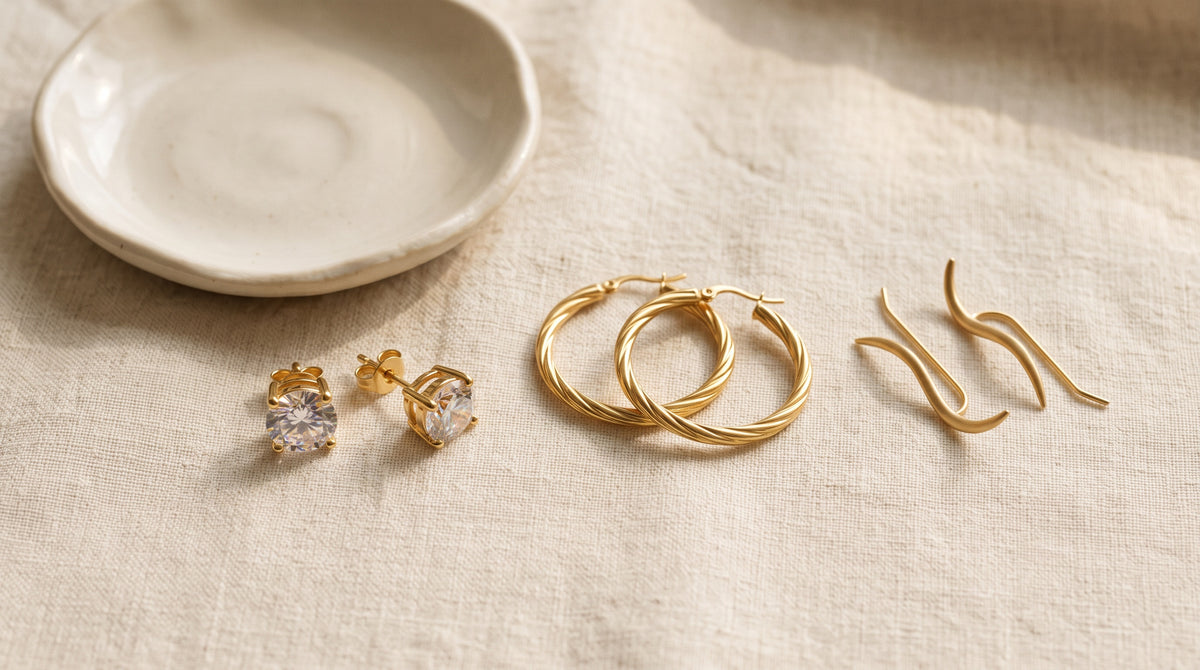
A stud is a single ornament, a stone, a pearl or a small metal shape, fixed to a straight post and held behind the lobe by a back. It sits flat against the ear and does not move, which makes it the most versatile earring, from the office to the weekend. Size changes the effect: around 3 to 5 mm reads as discreet, 6 to 8 mm is clearly visible. Our moissanite stud earrings come in three sizes for that reason.
Hoops
Hoops form a full or nearly full circle through the piercing. They are usually measured by outside diameter: below about 20 mm they look small and neat, 20 to 40 mm is the classic everyday range, and beyond that they become statement pieces. Thickness and texture matter as much as diameter, as with our twisted hoop earrings in 20, 25 and 30 mm. Closures vary: a hinged section that clicks shut, a latch at the back, or a fine wire that slides into the hollow tube of an “endless” hoop.
Huggies
Huggies are small, often thicker hoops that wrap snugly around the lobe with almost no gap, usually with a hinged click closure. They are the easiest hoops to stack in second and third holes and stay put during the day. Our huggie earrings come in 7 and 9 mm, two common sizes for the lobe.
Earring styles that move: drops, dangles, chandeliers and threaders
Drop earrings
A drop earring has one element hanging just below the lobe, such as a teardrop, a pearl or a small charm, attached to a post or a hook. The movement is limited and the length short, so drops look polished without being loud. You will find several shapes in our drop earrings collection.
Dangle earrings
Dangles are longer and swing freely, often with several linked elements. They draw the eye down toward the neck and catch the light as you move, which makes them a natural choice for evenings or for a simple outfit that needs a focal point.
Chandelier earrings
Chandeliers spread out in tiers or branches, like the light fixture they are named after. They are the most dramatic style and often the heaviest. If you love them, wear them for a few hours rather than all day: heavy earrings worn often can gradually stretch the piercing.
Threader earrings
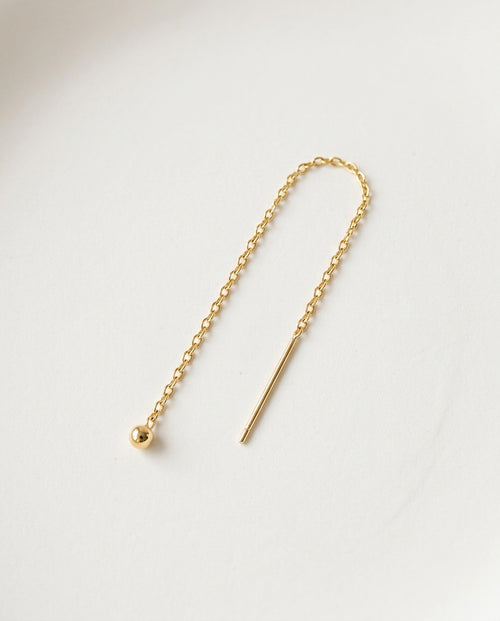
A threader is a fine chain, sometimes with a thin bar or a small charm, that you pull through the piercing so part hangs in front and part behind. You choose how long each side falls, and there is no separate back to lose. They are light and fluid, but a very fine chain needs gentle handling to avoid knots.

Ear climbers, ear cuffs and clip-ons
Ear climbers
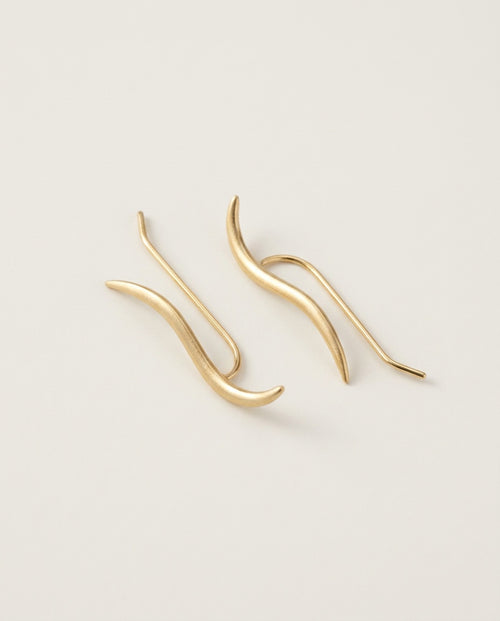
Also called ear crawlers, climbers go into a regular lobe piercing, then a curved bar runs up along the edge of the ear so the earring seems to climb. They give the look of several piercings with a single hole. Our wave ear climber earrings follow that curve in a simple wave line.
Ear cuffs
An ear cuff does not need a piercing at all. It slides onto the thinner part of the cartilage, usually around the middle of the ear, and is gently squeezed to hold in place. The steps for placing one so it stays comfortable are in our guide on how to wear ear cuffs.
Clip-on earrings
Clip-ons hold the lobe between a front ornament and a hinged back, sometimes lined with a soft pad; screw clips let you adjust the pressure. Modern clips come in most styles, from studs to clip-on hoop earrings. They are the obvious choice for unpierced ears and a useful option when a piercing is irritated.
Ear jackets
An ear jacket combines a small stud in front with a larger piece that hangs behind the lobe, both held on the same post. From the front, the back element peeks out below the ear, giving a layered effect from a single piercing.
Types of earring backs
Earring back types fall into two groups: separate backs that slide onto a post, and closures that are built into the earring itself. Choosing well affects comfort, security and how easily you can put the earring on.
Butterfly backs
Also called push backs or friction backs, these are the small metal pieces with two curled loops that grip the post. They are the most common back on studs. They loosen with use; pinching the loops slightly closer restores the grip, and replacing them is inexpensive.
Silicone and comfort backs
Soft silicone or rubber backs grip well and feel gentle behind the lobe. Larger “comfort” or disc backs, often metal with a silicone ring, spread the weight of heavier studs so they face forward instead of drooping. Pure silicone backs can harden or yellow over time.
Screw backs
The post is threaded and the back screws on. This is the most secure option for studs, which is why it is common on valuable pieces and children's earrings, but it takes longer to put on and the threads need to stay clean.
Leverbacks
A hinged lever on the back of the earring closes into a catch on the wire, so there is no loose part to lose and the earring cannot slip out of the hole. Our pearl leverback earrings use this closure, a good choice for drops worn all day.
Hooks, hinges and latches
French hooks, or fish hooks, are open curved wires that simply pass through the hole: quick to wear, but adding a small rubber stopper keeps them from slipping out. Hoops and huggies usually close with a hinged section that clicks into place, or with a latch, a hinged wire behind the lobe that locks into a notch. Larger statement studs sometimes use an omega back, a hinged loop that folds against the post.

How to choose the right earrings for you
Style rules about face shapes are only guidelines; proportion and comfort matter more. A few practical points:
- Match weight to wear time. Studs, huggies and light drops suit long days; chandeliers and large hoops are better for a few hours.
- Think about your routine. If you wear a scarf, a headset or a mask, flat styles snag less than hooks and dangles.
- Build multiple piercings by size. The usual approach is the largest piece in the first hole, then smaller studs or huggies higher up, with one cuff or climber as a focal point.
- Look after sensitive ears. If your lobes react easily, check the post material first; the guide to hypoallergenic jewelry explains which metals are best tolerated.
- Keep posts and backs clean. Residue builds up where the back meets the post; this routine for cleaning earrings at home takes a few minutes.
FAQ
What is the most common type of earring back?
The butterfly back, also called a push or friction back. It comes with most studs and many drops on posts. It is easy to use and easy to replace, but it can loosen over time.
Which earring backs are the most secure?
Screw backs are the most secure for studs. For hanging earrings, leverbacks and hoops with a hinged or latch closure hold far better than open hooks. A silicone stopper adds security to hooks.
What is the difference between huggies and hoops?
Huggies are a type of small hoop designed to sit tightly around the lobe with almost no gap. Regular hoops hang lower and come in much larger diameters. Huggies are easier to stack and to wear all day.
Can you wear earrings without pierced ears?
Yes. Clip-on earrings hold the lobe with a hinged clip, and ear cuffs slide onto the cartilage. Both now come in many everyday styles, from studs to hoops.