How to Clean Earrings: Posts, Backs and Every Material
How to clean earrings at home, sanitize posts with 70% alcohol, clean earring backs and care for gold, silver, pearls and stones.

In this guide
Knowing how to clean earrings matters more than for any other piece of jewelry: the posts pass through the skin every day, and the backs sit in a warm spot where oil, soap and dead skin collect. A few minutes of care keeps them bright and comfortable to wear.
This guide covers the everyday wash, how to sanitize posts, how to clean earring backs, what each material tolerates and how often to do it all. One limit up front: if a piercing is recent, painful or looks infected, ask a professional piercer or a doctor. The advice here is for healed ears.
Short answer: Soak the earrings and their backs for 5 to 10 minutes in warm water with a drop of mild dish soap, brush gently with a soft toothbrush, rinse and dry completely. To sanitize metal posts, wipe them with 70% isopropyl alcohol and let them air dry. Keep alcohol away from pearls and porous stones.
How to clean earrings at home, step by step
This routine suits most metal earrings, with or without set stones, and takes about fifteen minutes plus drying time. It is the same gentle approach described in the broader guide to cleaning jewelry at home, adapted to the small parts of an earring.
- Prepare a bowl of warm, not hot, water with one or two drops of mild, unscented dish soap.
- Separate the pieces. Remove the backs, open hinged hoops and keep each pair in a small dish. If you work at the sink, close the plug first.
- Soak for 5 to 10 minutes to soften residue from skin, makeup and hair products.
- Brush gently with a soft or extra-soft toothbrush, paying attention to the post, the hinge and the base of any setting.
- Rinse under lukewarm running water, holding the pieces over the bowl.
- Dry completely by patting with a lint-free cloth, then leave everything on a towel for an hour before storing. Trapped moisture dulls metal and weakens glue.
For a quick weekly refresh, you can skip the soak and simply wipe the posts and backs with a cloth dampened in soapy water, then with a dry one.
How to sanitize earrings without damaging them
Cleaning removes visible dirt; sanitizing reduces the bacteria that cause odor and irritation. For healed ears, the simplest tool is 70% isopropyl alcohol from the pharmacy. It disinfects better than 90% or 99% alcohol, because the water it contains helps it act on bacteria and slows evaporation.
- Soak a cotton pad and wipe the post from base to tip, then the inside of the back.
- For plain metal studs or hoops without stones, you can dip just the posts for about a minute.
- Let them air dry: the alcohol needs a little contact time to work, then evaporates on its own.
Use it with restraint on plated jewelry. An occasional wipe on the post is fine, but repeated soaking can wear a thin gold layer and dull enamel or colored finishes. Never use alcohol on pearls, mother-of-pearl, opal, turquoise, amber or glued stones: it can dry out organic materials and weaken adhesives.
Sanitizing does not replace simple habits: avoid sharing earrings, clean a secondhand pair before the first wear, and wipe the posts again after a cold or a skin infection.
How to clean earring backs
Backs are where the buildup hides. The small curled channel of a butterfly back traps sebum and soap, which is why an earring can smell even when the front looks spotless.
Butterfly (push) backs
Soak them separately in warm soapy water for 10 minutes, then push a wooden toothpick or a fine interdental brush through the opening. Rinse, wipe with alcohol if they are plain metal, and let them dry on a towel. If a back has lost its grip, replace it rather than squeezing it tighter: a loose back is how most single earrings get lost.
Silicone and rubber backs
Wash them in soapy water and rinse. Silicone yellows and hardens with time; when it does, replace it, since it no longer grips well and is difficult to get clean.
Screw backs and lever backs
Brush the threads of screw backs with a dry toothbrush to remove lint, then wash them. On lever backs, open the closure fully, brush the hinge and dry it carefully so no water stays inside the mechanism. Delicate pearl leverback earrings are the exception to the soak: wipe only the metal hook and keep the pearl dry.

Cleaning tips by earring type
The method stays the same, but each shape has its own trouble spot. If you are not sure what your pair is called, the guide to types of earrings identifies each style and closure.
Studs
Studs are often worn for days without being removed, so their posts collect the most residue. Brush at an angle behind the setting, where soap and lotion collect under the stone. The same applies to small moissanite stud earrings: brush behind the stone, then dry the setting well.
Hoops and huggies
The hinge and the hollow inner curve of a hoop collect dirt. Open the hoop, brush along the inside and through the hinge, then let it dry open. Small huggie earrings sit close against the lobe, so they need this more often than larger hoops.
Drop earrings and threaders
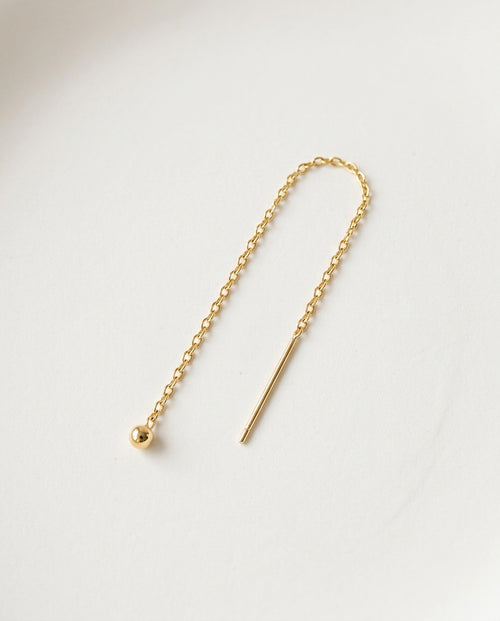
Hold the hook so the drop does not knock against the bowl. Threaders are easy: pull the fine chain through a soapy cloth between two fingers, rinse, and dry it straight to avoid kinks. A pair of gold threader earrings only needs the part that passes through the ear wiped with alcohol.
Clip-ons and ear cuffs
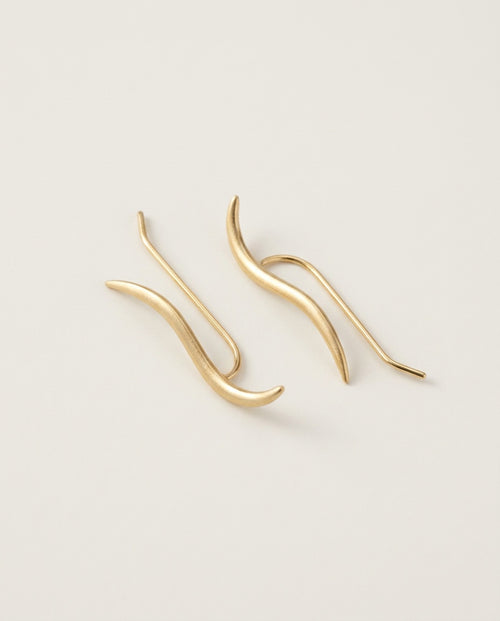
They do not pierce the skin, so a wipe with a soapy cloth followed by a dry one is enough. Keep clip pads and springs dry. Pieces from the ear cuff collection are open rings: avoid prying them wider while cleaning, because repeated bending fatigues the metal.
What each earring material can handle
When you do not know the material of a pair, treat it like the most fragile line in the table below.
| Material | Soapy water | 70% alcohol | Avoid |
|---|---|---|---|
| Karat gold | Yes | Yes | Chlorine, abrasive pastes |
| Gold plated, gold vermeil | Yes, briefly | Occasional wipe on posts | Long soaks, abrasives, polishing compounds |
| Sterling silver | Yes | Yes | Bleach, chlorine |
| Stainless steel, titanium | Yes | Yes | Scouring pads |
| Pearls, mother-of-pearl | Damp cloth only | No | Soaking, alcohol, vinegar, ultrasonic cleaners |
| Opal, turquoise, amber | Damp cloth only | No | Soaking, alcohol, heat |
| Glued stones and crystals | Quick wash | Posts only | Long soaks, boiling water, ultrasonic cleaners |
Silver that has darkened needs more than soap: a silver polishing cloth removes tarnish without scratching. Plated pieces, on the other hand, should never be rubbed with a polishing cloth that contains compound, as it removes the color layer along with the dirt.
How often should you clean earrings?
- Earrings worn every day (studs, huggies): wipe posts and backs once a week, full soapy clean once a month.
- Earrings worn occasionally: a quick wipe after each wear before storing, a full clean every few months.
- Right away after the gym, a swim in a pool or the sea, a day of heavy makeup or hairspray, or as soon as they smell.
Between cleans, store each pair dry and separately; a closed box slows tarnish on silver. Pearls in particular, like those on pearl drop earrings, prefer a soft pouch to a humid bathroom shelf.

Common mistakes to avoid
- Toothpaste and baking soda: abrasive, they scratch polished metal and remove plating.
- Bleach and chlorine: they attack many alloys, silver and gold included.
- Boiling water: tolerable for plain metal pieces with no stones, but it can crack stones, loosen glue and damage pearls.
- Ultrasonic cleaners on pearls, porous stones, glued settings or plated pieces.
- Putting earrings away damp or sealed in a bag straight after washing.
- Pins and needles to clean backs: they scratch and can bend the channel out of shape.
If irritation continues even with clean earrings, the cause is often the metal itself rather than dirt. The guide to hypoallergenic jewelry explains which metals usually suit sensitive ears, and a dermatologist can confirm an allergy.
FAQ
Why do my earrings smell?
The smell comes from sebum, dead skin cells and bacteria trapped on the posts and inside the backs. A soapy soak, a brush through the backs and a wipe with 70% alcohol usually remove it. If the smell comes from the piercing itself and persists with clean jewelry, have it checked by a professional.
Can I clean earrings with hand sanitizer?
In a pinch, on plain metal posts, yes. Gels contain thickeners and fragrance that leave a sticky film, so rinse and dry the posts afterward. Liquid 70% isopropyl alcohol does the job more cleanly, and neither should touch pearls.
Can I use hydrogen peroxide on earrings?
It is not necessary: soap and 70% alcohol cover cleaning and sanitizing. Peroxide can dull some finishes, and it is used industrially to bleach pearls, so keep it well away from them.
Should I clean new earrings before wearing them?
Yes, a wipe of the posts with alcohol and a quick soapy rinse is a good habit, especially for a pair that has been tried on in a store or bought secondhand. Let them dry fully before the first wear.
How do I clean gold-plated earrings without ruining them?
Keep it short and gentle: a brief soak in soapy water, a very soft brush, a careful rinse and thorough drying. Avoid abrasives, polishing compounds and repeated alcohol soaks, which wear the thin gold layer faster than daily wear does.