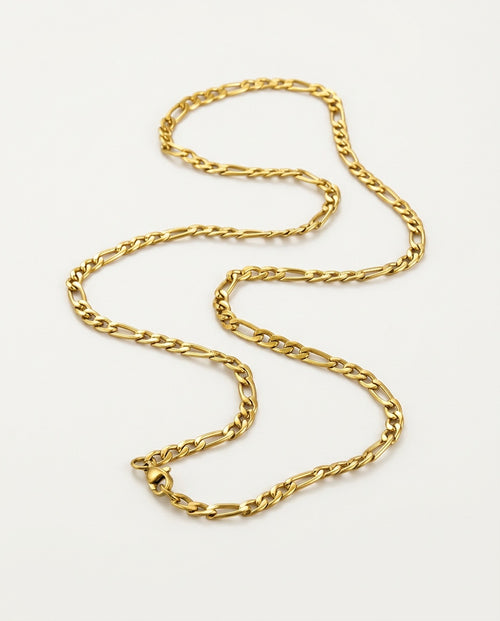
Does Stainless Steel Tarnish? Care, Cleaning and Myths
Why stainless steel rarely tarnishes, what can still dull or spot it, how to clean it safely and how it compares with sterling silver.
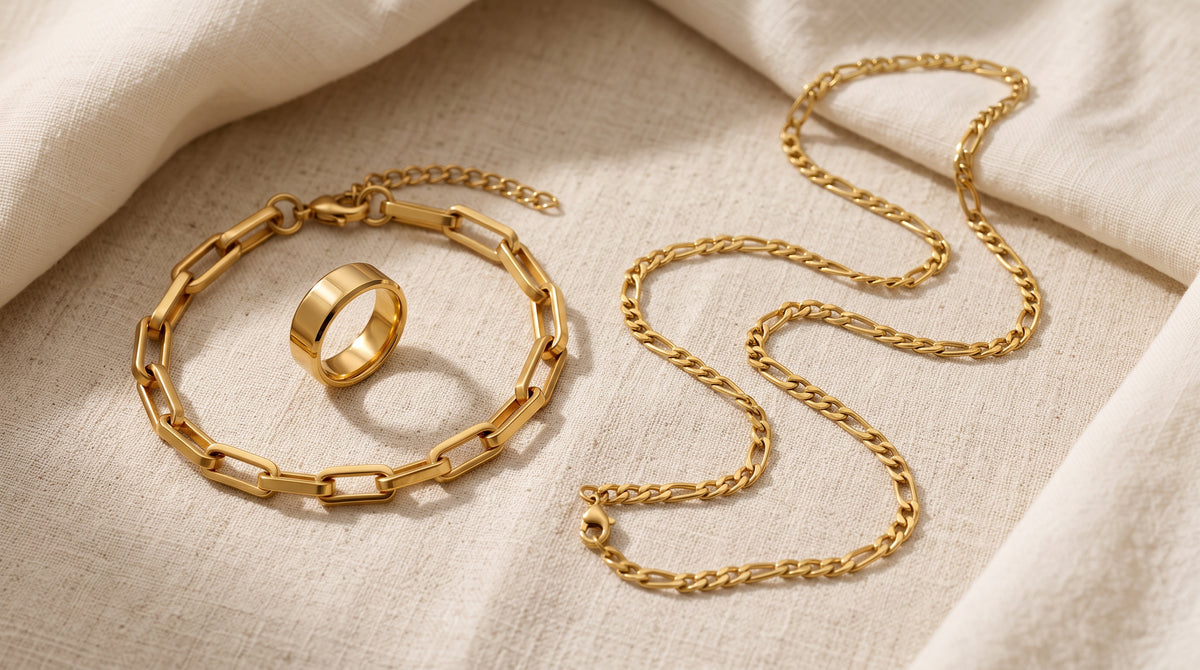
In this guide
- 01Why stainless steel rarely tarnishes
- 02316L vs 304: which steel grade is used in jewelry?
- 03Does stainless steel tarnish or discolor? The real causes
- 04Gold-tone and PVD-coated steel: what wears off
- 05How to clean stainless steel jewelry
- 06Stainless steel vs sterling silver: which should you choose?
- 07Is stainless steel jewelry good for everyday wear?
- 08Is there really such a thing as tarnish free jewelry or waterproof jewelry?
- 09FAQ
Does stainless steel tarnish? It is one of the most common questions about everyday jewelry, and the honest answer is more nuanced than the "never tarnishes" labels seen on so many listings. Stainless steel resists tarnish far better than silver or brass, but it is not invincible.
This guide explains what actually protects steel, which grades matter, what can dull or discolor it, how to clean it safely and how it compares with sterling silver, so you can choose and care for steel pieces with realistic expectations.
Short answer: Good-quality stainless steel very rarely tarnishes. Its chromium forms an invisible oxide layer that rebuilds itself when the surface is scratched. Steel can still dull, spot or discolor with chlorine, long exposure to salt water, harsh chemicals or a low-grade alloy, and gold coatings on steel wear away with friction.
Why stainless steel rarely tarnishes
Stainless steel is an iron alloy that contains at least 10.5% chromium. In contact with oxygen, that chromium forms an extremely thin, transparent film of chromium oxide on the surface, known as the passive layer. This film, not a coating, is what stops the metal underneath from reacting with air and moisture.
The clever part is that the passive layer repairs itself. When a steel ring gets scratched, fresh chromium is exposed and a new oxide film forms almost immediately in ordinary air. That is why a scratched steel piece keeps its color, while a scratched plated piece can reveal a different metal underneath.
Silver tarnish works in a completely different way. Silver reacts with sulfur compounds in the air and on the skin and builds up a dark film of silver sulfide. Steel does not form that kind of layer in normal conditions, so it does not turn black the way an old silver chain does.
The name itself is a useful reminder: "stainless" is better read as "stains less". The alloy resists corrosion very well, but in the wrong conditions the passive layer can be overwhelmed, and that is when spots or discoloration appear.
316L vs 304: which steel grade is used in jewelry?
Not all stainless steel is the same. Two grades appear most often in jewelry descriptions, and the difference between them matters if you swim, sweat a lot or live near the sea.
304 stainless steel
Grade 304 is the most widely used stainless steel in the world, found in sinks, cutlery and countless accessories. It contains roughly 18% chromium and 8% nickel, which is why it is sometimes labeled 18/8. It performs well in daily life but is more vulnerable to chlorides, the salts found in seawater, pool water and sweat.
316L stainless steel
Grade 316L adds about 2 to 3% molybdenum, which improves resistance to chlorides and to pitting. The "L" means low carbon (0.03% maximum), which limits corrosion around welds and solder joints. It is widely used for watch cases and body jewelry and is often sold as "surgical steel", a commercial term rather than a regulated standard.
What the grade means for sensitive skin
Both grades contain nickel, but it is tightly bound inside the alloy. In the European Union, items in prolonged contact with the skin may not release more than 0.5 µg of nickel per cm² per week, and piercing posts no more than 0.2 µg. People with a strong nickel allergy should still be cautious and talk to a dermatologist. The guide to metals that suit sensitive skin covers the subject in detail.
Does stainless steel tarnish or discolor? The real causes
When stainless steel changes color, it is almost always for one of the following reasons:
- Chlorine. Pool water, hot tubs and bleach-based cleaners attack the passive layer. Repeated exposure can leave a dull or spotted surface.
- Salt water and sweat over long periods. Chlorides are the main enemy of steel. Rinsing after the beach or the gym removes them before they cause damage.
- Residue buildup. Lotion, perfume, sunscreen and soap leave a film that looks like tarnish but is simply dirt. It washes off.
- Iron contamination. Contact with ordinary carbon-steel tools or steel wool can leave tiny iron particles on the surface, which rust into orange specks.
- A low-grade alloy. Some very cheap pieces use steels with less chromium, which spot or pit much faster.
- Worn coating. A gold or black finish on steel is a separate layer that can thin out over time.
Light discoloration from residue or mild spotting usually cleans off. Deep pitting, where the surface has been physically eaten into, cannot be reversed at home.
Gold-tone and PVD-coated steel: what wears off
Much gold-tone and black steel jewelry is coated by PVD (physical vapor deposition), a vacuum process that bonds a thin layer of metal or ceramic-like compound to the steel. PVD is generally harder and longer-lasting than traditional electroplating, which is why it is popular for watches and rings.
It is still a surface layer. On the inside of a ring, on a clasp or on a bracelet that rubs against a desk, friction slowly thins it until the silver-colored steel starts to show. That is wear, not tarnish: cleaning will not bring the color back, only re-coating can.
To keep a coated finish longer, avoid abrasive cleaners and chemically treated polishing cloths, take rings off for manual work, and store coated pieces so they do not rub against each other. The differences between plating methods and gold layers are explained in gold vermeil vs gold filled vs gold plated.

How to clean stainless steel jewelry
Since there is no tarnish layer to dissolve, cleaning steel is mostly about removing residue. Gentle methods are enough.
- Fill a small bowl with warm water and a few drops of mild dish soap.
- Soak the piece for 5 to 10 minutes to loosen lotion and skin oils.
- Brush gently with a soft toothbrush, paying attention to links, engravings and clasps.
- Rinse thoroughly under clean running water to remove every trace of soap.
- Dry completely with a soft lint-free or microfiber cloth, then leave chains flat in the open air for a few minutes.

For stubborn marks on uncoated steel, a paste of baking soda and a little water, rubbed gently with a soft cloth and rinsed well, usually does the job. Do not use it on gold-tone or black coated pieces: even a mild abrasive can scuff the finish.
What to avoid
- Bleach and chlorine-based household products.
- Steel wool, scouring pads and metal brushes, which scratch and can leave iron particles behind.
- Silver dips made to dissolve tarnish: useless on steel and harmful to coatings.
- Toothpaste on coated pieces, as it is mildly abrasive.
The same soap-and-water routine works for most of a jewelry box, and this guide on how to clean jewelry at home adapts it to silver, gold, pearls and gemstones.
Stainless steel vs sterling silver: which should you choose?
Both look similar when new, but they behave very differently after years of wear.
| Criterion | Stainless steel | Sterling silver |
|---|---|---|
| Composition | Iron with at least 10.5% chromium, often nickel and molybdenum | 92.5% silver, 7.5% other metals, usually copper |
| Tarnish | Very rare in normal use | Darkens with sulfur in the air and on skin |
| Scratches and dents | Hard, resists scratches and dents | Softer, scratches and bends more easily |
| Resizing and repair | Difficult; most jewelers will not resize steel rings | Can be resized, soldered and polished by a jeweler |
| Everyday care | Soap and water | Regular polishing and anti-tarnish storage |
| Metal value | Low | Precious metal |
Steel suits pieces you never want to think about: chains worn in the shower, bracelets worn every day, simple band rings. Sterling silver suits pieces you may want to resize, repair or pass down, provided you accept a little polishing. Many people simply own both and wear each where it makes most sense.
Is stainless steel jewelry good for everyday wear?
For daily wear, stainless steel is one of the most practical materials available. It is durable, keeps its color, copes with water better than most plated metals and stays affordable. That is why it is so common in men's chains and men's bracelets, where pieces are worn around the clock.
Simple, robust shapes show off what the material does best. A men's stainless steel bracelet or a men's steel band ring is the kind of piece people put on in the morning and forget about.
Its limits are worth knowing too:
- It is hard to resize, so check your size carefully before buying a steel ring.
- It has little resale value compared with silver or gold.
- Hand engraving is difficult on such a hard metal, although laser engraving works well.
- Gold-tone and black finishes on steel wear like any coating.
- It contains nickel, which matters for the most reactive skin.
Is there really such a thing as tarnish free jewelry or waterproof jewelry?
"Tarnish free jewelry" and "waterproof jewelry" are popular searches and popular labels, but neither is a technical standard. In practice they mean a piece should not discolor quickly with water, sweat or air.
Materials that genuinely resist tarnish include stainless steel, titanium, platinum and high-purity gold. Pure gold does not oxidize, while lower-karat gold alloys contain more copper and silver and can darken slightly over time. Plated or coated pieces depend entirely on the quality and thickness of their outer layer.
Even with resistant metals, a few habits make a real difference: rinse jewelry after the sea or the pool, let it dry before putting it away, put it on after lotion and perfume, and store each piece in its own pouch. Plain water rarely harms steel; what harms it is what is dissolved in the water. You can browse more everyday pieces in the men's jewelry collection.
FAQ
Can you shower with stainless steel jewelry?
Generally yes: plain water does not harm good-quality stainless steel. Soap can leave a dull film over time, so rinse the piece well and dry it. Coated gold-tone or black pieces last longer if you take them off before showering.
Does stainless steel turn your skin green?
Green marks come from copper reacting with sweat and skin acids, which is why they are associated with brass and some cheap alloys. Stainless steel contains no significant amount of copper and is not known for leaving green marks. A faint gray mark can occasionally appear with a poor-quality alloy or heavy sweating.
How can you tell if jewelry is stainless steel?
Stainless steel feels heavier than aluminum, is much harder than silver and usually looks slightly grayer than polished silver. A magnet is not a reliable test, since common grades such as 304 and 316L are largely non-magnetic while other stainless grades are magnetic. A stamp such as "316L" or "SS" on the clasp, together with the seller's description, is the most reliable clue.
Does stainless steel rust?
It can, in specific conditions: constant exposure to chlorides, contamination by iron particles or a low-chromium alloy. In ordinary jewelry use, rust is uncommon. Small orange specks caused by contamination often come off with gentle cleaning.